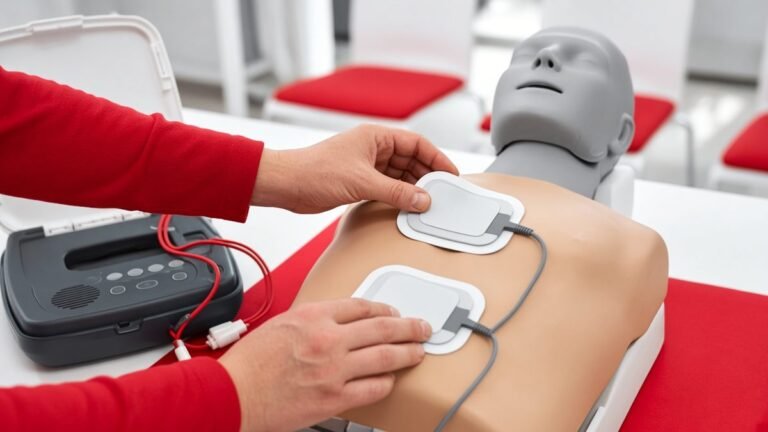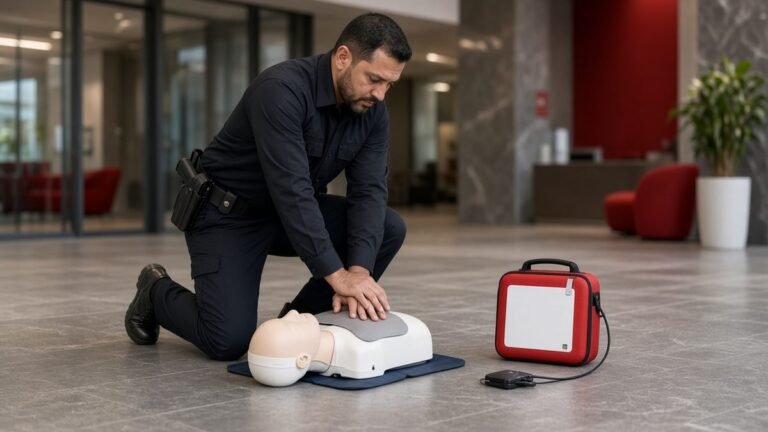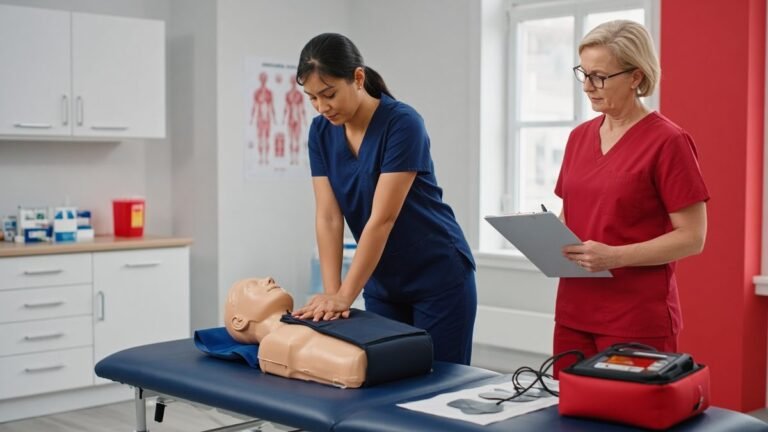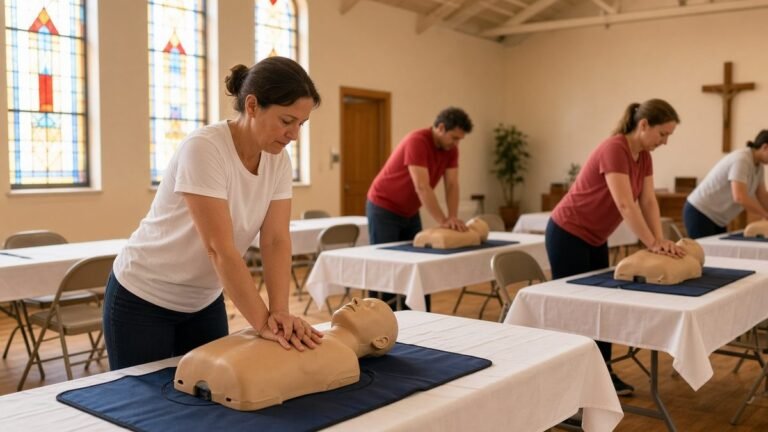
CPR is the skill set — compressions, breaths, AED use, and choking relief. Heartsaver (and similar layperson courses) is the American Heart Association product for non-healthcare workplaces and schools. BLS for Healthcare Providers is the AHA course hospitals, clinics, and clinical programs typically require. If you work in patient care or are in a nursing, medical, dental, EMS, or similar program, start with BLS. If you are a teacher, coach, childcare worker, gym or hotel staffer, or office safety team member, start with Heartsaver.
Call us with the exact wording from HR or your school if you are unsure — we will tell you which card to book.
- Call: (786) 292-8277 or (786) 321-0749
- Group quote: contact form
- Enroll / view schedule: class schedule
What “CPR certification” actually means
People say “CPR certification” when they mean different cards. CPR itself is not a single product name. It is the set of skills taught inside several American Heart Association courses — and, on this site, also inside a separate ASHI CPR & AED course.
What changes from course to course is who the card is for, how deep the skills go (especially team and provider-level skills), and which agency issues the card. Hospitals, licensing boards, and clinical programs look for BLS for Healthcare Providers. Most offices, schools, gyms, hotels, and childcare settings look for a Heartsaver card (CPR/AED alone, or CPR/AED with First Aid).
For workplace framing — which course fits hotels, clinics, construction, and mixed teams — see on-site corporate CPR training.
What is BLS for Healthcare Providers?
BLS (Basic Life Support) for Healthcare Providers is the American Heart Association course for nurses, EMTs, paramedics, dental and medical staff, and students in healthcare programs.
At PulseStart, the all-in-person BLS path covers high-quality CPR for adults, children, and infants; the AHA Chain of Survival; barrier devices and rescue breathing; AED use; team dynamics in multi-rescuer resuscitation; and relief of choking. You must demonstrate proficiency — including prioritizing chest compressions and integrating AED use — to receive the card.
Verified on the live BLS page (September 18, 2026):
- Price: $100 (all-in-person)
- Length: approximately 2 to 3 hours
- Format: entirely in person — no online module required for this path
- Card: same-day AHA BLS for Healthcare Providers eCard when you pass skills
- Validity: 2 years
Full detail: BLS certification in Miami. Nursing and clinical students: CPR certification for nursing students in Miami. Healthcare hub: healthcare CPR certification in Miami.
What is Heartsaver?
Heartsaver is the American Heart Association line for people who are not healthcare providers — teachers, gyms, coaches, childcare, elderly care, office teams, hotel and security staff, and similar roles.
PulseStart teaches several Heartsaver products described on the American Heart Association courses hub:
- Heartsaver CPR & AED — adult, child, and infant CPR plus AED use
- Heartsaver First Aid — First Aid skills on their own
- Heartsaver First Aid CPR & AED — the combined course (First Aid plus CPR/AED)
The live Heartsaver First Aid CPR & AED page states that course is not designed for healthcare professionals or for anyone working or planning to work in the medical area (for example, nursing or medical students). Those students book BLS instead.
Verified on the live Heartsaver First Aid CPR & AED page (September 18, 2026):
- Price: $100
- Length: approximately 2 to 3 hours
- Format: entirely in person — no online modules required
- Card: same-day AHA Heartsaver First Aid CPR & AED certification card when you pass skills
- Validity: 2 years
Course page: CPR, AED & First Aid classes in Miami. Standalone Heartsaver CPR & AED and Heartsaver First Aid are listed on the AHA hub; ask when you book if you need CPR/AED only or First Aid only.
First Aid matters when bleeding, burns, fractures, heat illness, allergic reaction, or similar emergencies are part of the job — or when an OSHA first-aid obligation is in play. The corporate training page maps Heartsaver CPR/AED versus Heartsaver First Aid CPR AED for workplaces; it also notes there is no blanket federal rule that every workplace must have CPR-trained staff.
Heartsaver vs BLS vs ASHI CPR/AED — side by side
AHA BLS Provider
- Who it’s for: Nurses, EMTs, paramedics, dental & medical staff, healthcare students
- PulseStart format: All in person; no online module required for this path
- Approx. length: ~2–3 hours
- Card: Same-day AHA BLS eCard; valid 2 years; $100
- Start here: BLS certification Miami
AHA Heartsaver First Aid CPR & AED
- Who it’s for: Teachers, gyms, coaches, childcare, elderly care, non-clinical workplaces — not for healthcare professionals or nursing/medical students
- PulseStart format: All in person
- Approx. length: ~2–3 hours
- Card: Same-day AHA Heartsaver card; valid 2 years; $100
- Start here: CPR/AED with First Aid
AHA Heartsaver CPR & AED / Heartsaver First Aid
- Who it’s for: Same layperson audiences; CPR/AED-only or First Aid-only when that is what the workplace needs
- PulseStart format: Described on the AHA hub as all-in-person options
- Approx. length: Ask when booking
- Card: AHA Heartsaver card (same-day when skills are passed, per AHA hub course descriptions); price not listed on a dedicated course page verified this run — ask when booking
- Start here: AHA courses hub
ASHI CPR & AED (separate agency — not AHA Heartsaver)
- Who it’s for: Lay audiences: teachers, gyms, coaches, childcare, elderly care, students — not for healthcare professionals or nursing/medical students
- PulseStart format: All in person
- Approx. length: ~2–3 hours
- Card: Same-day ASHI card; valid 2 years; $80
- Start here: CPR & AED certification Miami
Do not treat the ASHI CPR & AED page as an AHA Heartsaver course. Different agency, different card. If your employer or school names American Heart Association or Heartsaver, book the AHA course — not ASHI — unless they explicitly accept ASHI.
Corporate rule of thumb from the corporate training page: Heartsaver CPR/AED for non-clinical roles (hotel front desks, security, office safety teams); Heartsaver First Aid CPR AED when First Aid is needed for the job or an OSHA first-aid obligation; BLS Provider when the contract names healthcare BLS.
My job or school only said “CPR” — which one do I book?
Use this decision path. When the paperwork is ambiguous, call with the exact wording — do not guess employer or school policy.
- Clinical role, patient care, or a nursing / medical / dental / EMS / healthcare program → Book BLS Provider. Schools and clinical employers that say “CPR” almost always mean BLS. See also nursing student CPR in Miami.
- Non-clinical workplace, school, daycare, gym, hotel, church, or office safety team → Book Heartsaver. Use Heartsaver First Aid CPR & AED when First Aid is required; ask for Heartsaver CPR & AED only when First Aid is not needed. Workplace mapping: corporate training.
- Mixed dental or medical office → Clinical staff → BLS; front desk and non-clinical staff → Heartsaver. One onsite morning for the whole practice is common for dental offices (corporate page).
- Still unsure → Call (786) 292-8277 with the exact line from HR, your handbook, or the job posting. We will tell you which card to book.
Common mix-ups (Heartsaver ≠ BLS, online-only cards, ASHI ≠ AHA)
Heartsaver is not BLS. A Heartsaver card will not satisfy a hospital or licensing board that requires BLS for Healthcare Providers. AHA BLS, ACLS, and PALS cards are the ones the site describes as accepted by hospitals, healthcare employers, and licensing boards nationwide.
Online-only “BLS” is not a legitimate AHA BLS card. A real AHA BLS card requires a hands-on skills evaluation with a live instructor. Fully online “BLS certifications” are rejected by hospital compliance. Detail: BLS renewal in Miami.
ASHI CPR & AED is not AHA Heartsaver. PulseStart’s $80 CPR & AED course is an ASHI product for lay audiences. If your requirement says AHA or Heartsaver, do not book ASHI by mistake.
HeartCode blended learning is a different path. For ACLS and PALS, PulseStart runs HeartCode skills sessions ($110 at PulseStart; the AHA online portion is purchased separately — currently listed at $173 on the HeartCode / Doral pages). For BLS, the all-in-person course at $100 is usually simpler: no online module to buy first. See HeartCode skills sessions in Miami.
How to take the right course with PulseStart in Miami
PulseStart is a firefighter- and paramedic-owned American Heart Association Training Site. Every class is taught by a working Miami or Miami-Dade firefighter paramedic — see CPR instructors in Miami.
- Training Site (Doral / Airport West): 3399 NW 72nd Ave, Suite 208-B, Miami, FL 33122
- Hours: Monday–Friday, 9:00 AM–6:00 PM; Saturday by appointment
- On-site groups: Miami-Dade and surrounding South Florida, including Broward County (confirm in your quote)
- Cards: same-day AHA eCards when you pass skills (and same-day ASHI cards for the ASHI CPR & AED course)
Local schedule and directions framing: CPR & BLS classes in Doral. Weekend / Saturday by appointment: weekend CPR classes in Miami.
Book the right course
Individuals: view the schedule and enroll, or call (786) 292-8277.
Groups / workplaces: request a free on-site quote via corporate training or the contact form. Group quotes are no-obligation and usually go out the same business day.
Unsure which course: call with your job or school requirement — we will tell you which card to book.
- Phone: (786) 292-8277 · (786) 321-0749
- Email: sales@pulsestartnow.com
- Address: 3399 NW 72nd Ave, Suite 208-B, Miami, FL 33122
Frequently asked questions
Is BLS the same as CPR certification?
No. CPR is the skill set (compressions, breaths, AED, choking relief). BLS is the American Heart Association healthcare-provider course that teaches those skills — plus provider-level team and multi-rescuer focus — to clinical audiences. Lay workplaces and schools usually need Heartsaver, not BLS. If your paperwork only says “CPR,” ask whether they mean BLS for Healthcare Providers.
What’s the difference between Heartsaver and BLS?
Audience and depth. Heartsaver is for non-healthcare roles: teachers, coaches, childcare, gyms, hotels, offices. BLS is for healthcare providers and healthcare students, with high-quality CPR for adults, children, and infants, AED use, bag-mask / multi-rescuer team dynamics, and skills testing at the provider level. At PulseStart, both the all-in-person BLS course and Heartsaver First Aid CPR & AED run about 2–3 hours at $100, with same-day cards when you pass — but the cards are not interchangeable. See BLS certification and Heartsaver First Aid CPR & AED.
My school or employer just said “get CPR certified.” Which one do I book?
Ask whether they require BLS for Healthcare Providers. If you are in a clinical program or a patient-care job, assume BLS until told otherwise. If you are office, school, daycare, gym, or hotel staff, Heartsaver is the usual fit (add First Aid when required). Call (786) 292-8277 with the exact wording and we will confirm before you pay.
Can a healthcare student take Heartsaver instead of BLS?
No — not if you need the healthcare card. PulseStart’s Heartsaver First Aid CPR & AED page states that course is not designed for healthcare professionals or for anyone working or planning to work in the medical area (for example, nursing or medical students). Book BLS. Nursing-program framing: CPR for nursing students in Miami.
Do I need First Aid with my CPR card for work?
It depends on your role and whether an OSHA first-aid obligation or job hazards (tools, heat, chemicals, crowds) apply. There is no blanket federal rule that every workplace must have CPR-trained staff. The corporate training page maps Heartsaver CPR/AED versus Heartsaver First Aid CPR AED. For the combined AHA course in Miami, see CPR, AED & First Aid. Tell us what your contract or carrier asks for — we will match the course; we do not invent legal conclusions for your workplace.
How long is BLS vs a Heartsaver-style class at PulseStart?
Both the all-in-person BLS Provider course and Heartsaver First Aid CPR & AED are listed at approximately 2 to 3 hours in person. Students who pass skills testing receive their card the same day. BLS and that Heartsaver combo are each $100 on their live course pages. Saturday sessions are by appointment; see weekend CPR classes.
We’re a mixed dental or clinic team — do we all take the same course?
Usually no. Per PulseStart’s corporate guidance: clinical staff take BLS Provider; front desk and other non-clinical staff take Heartsaver CPR/AED (or Heartsaver with First Aid when needed). Dental offices often certify the whole practice in one closed morning so chair time is not lost for a full day. Request a group quote via corporate training or contact.
Is the $80 CPR & AED course on your site the same as Heartsaver?
No. The $80 CPR & AED course is an ASHI course — a separate training agency. Heartsaver is an American Heart Association product. If your employer or school requires AHA or Heartsaver, book the AHA course. ASHI is appropriate only when your requirement accepts ASHI.